
FG, World Bank Partner NGF to Drive Reforms in Basic Education, Primary Healthcare
The World Bank–assisted Human Capital Opportunities for Prosperity and Equity -- Governance (HOPE-GOV) Program of the Federal Ministry of Budget and Economic Planning has engaged the Nigeria Governors‘ Forum (NGF) to support the implementation of governance reforms in the management of basic education and primary healthcare across the 36 states of the Federation and the Federal Capital Territory.
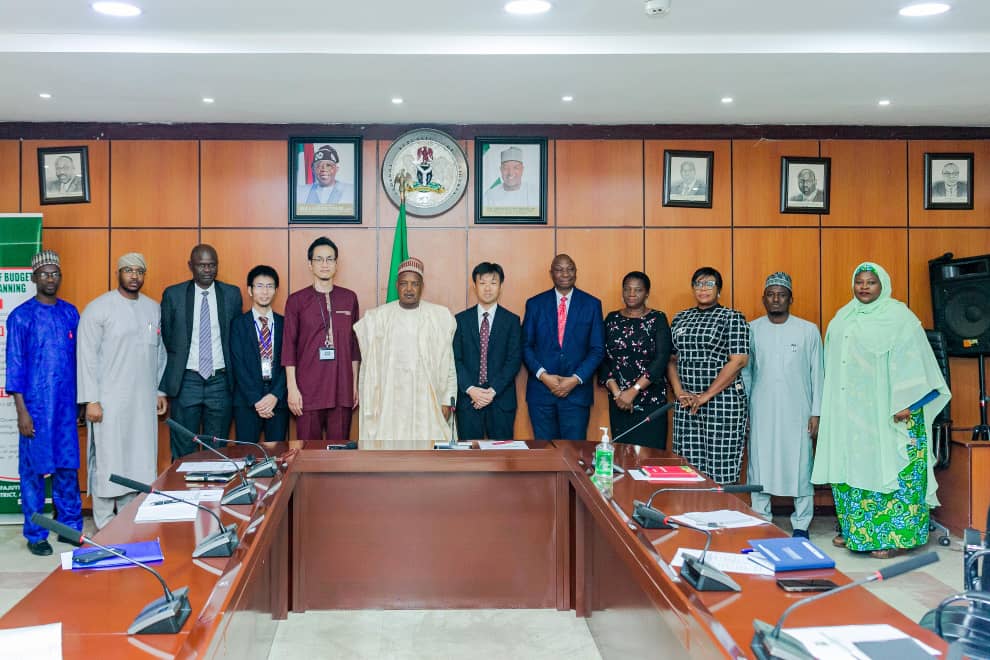
The National Coordinator of the HOPE-GOV Program, Dr. Assad Hassan, who led members of the National Program Coordination Unit on the advocacy visit in Abuja on Tuesday, described the Nigeria Governors’ Forum as a critical platform for strengthening inter-governmental coordination to ensure the successful implementation of the Program.
“It’s in the recognition of the pivotal role that the Nigeria Governors’ Forum plays on fostering inter-governmental coordination and collaboration that we are here to brief the secretariat and also to socialise the HOPE Governance Program in order to seek strategic support as well as guidance and also to explore avenues for collaboration towards ensuring effective and successful implementation of the Program not just in the 36 States of the Federation but also in the FCT,” he said.
Dr. Assad hailed the Forum for its leadership in championing strategic interventions aimed at promoting governance, service delivery, and outcomes in the basic education and primary healthcare sectors in the country.
Dr. Assad stated that the Program is designed to maximise the utilisation of federal and state funds at the facility level in the health and basic education sectors, while reinforcing transparency and monitoring of inter-governmental transfers and expenditure.
He added that the Initiative will also enhance the execution of coordinated annual service delivery plans and improve accountability in health and basic education spending across all levels of government.
The HOPE-GOV Program, he said, additionally aims to close staffing gaps in the education and health sectors by incentivising states to recruit, retain, and equitably deploy teachers and priority healthcare workers.
“We are also looking at improvement in human resources in the two sectors. We are talking about employment, retention and equitable posting of workers in the two sectors,” he stated.
According to the National Coordinator, the $500 million Performance Incentive Program, is structured around three result areas: increasing the availability and effectiveness of financing for basic education and primary healthcare service delivery; enhancing transparency and accountability in the financing of basic education and primary healthcare; and improving the recruitment, deployment, and performance management of basic education teachers and primary healthcare workers by federal, state, and local governments.
In his remarks, the World Bank Task Team Lead of the HOPE-GOV, Mr. Ikechukwu Nweje, emphasised that the Program provides a unique opportunity to build the capacity of civil servants across the States in order to sustain and drive the reform process in the two sectors.
Speaking at the meeting, the Director-General of the NGF, Dr. Abdulateef Shittu, expressed optimism that the HOPE-GOV Program would mark a significant maturation of State Governments reform journey by shifting the focus from merely publishing data to using data to improve outcomes, and translating fiscal transparency into tangible improvements in schools and primary healthcare facilities.
“Our role is to enable coordination, share practical solutions, and help states move from compliance to performance. As we move into full implementation, success will depend on early commitment and readiness at the state level.
“The Nigeria Governors’ Forum looks forward to working closely with the Federal Government, States, the World Bank, and stakeholders to ensure that this program delivers on its promise,” he said.
Joe Mutah
Communications Officer
HOPE-GOV Program
28th January, 2026